


IVF Treatment: A Solution for Couples Facing Reproductive Health Issues
- BLOG
- How IVF Works: From Egg Retrieval to Pregnancy
For many couples, starting a family is one of life’s most cherished dreams. However, reproductive health issues can make conception difficult, creating emotional, physical, and financial challenges. Fortunately, advancements in fertility medicine have provided effective solutions, with In Vitro Fertilization (IVF) emerging as one of the most successful treatments for infertility.
IVF treatment has helped millions of couples worldwide achieve parenthood despite various reproductive health challenges. Whether infertility is caused by female factors, male factors, age-related fertility decline, or unexplained infertility, IVF offers hope and a proven path toward pregnancy.
In this blog, we explore how IVF treatment works, the reproductive health conditions it addresses, and why it remains one of the most trusted fertility treatments available today.
Understanding Reproductive Health Challenges
Reproductive health issues can affect both men and women and may prevent natural conception. Some of the most common causes of infertility include:
Female Fertility Issues
- Blocked or damaged fallopian tubes
- Polycystic Ovary Syndrome (PCOS)
- Endometriosis
- Ovulation disorders
- Uterine abnormalities
- Diminished ovarian reserve
- Advanced maternal age
Male Fertility Issues
- Low sperm count
- Poor sperm motility
- Abnormal sperm morphology
- Genetic conditions affecting fertility
- Hormonal imbalances
Unexplained Infertility
In some cases, fertility tests reveal no clear reason for infertility. Couples may still struggle to conceive naturally despite having normal reproductive evaluations. IVF can often help overcome these challenges.
What Is IVF Treatment?
In Vitro Fertilization (IVF) is an advanced fertility treatment in which eggs are retrieved from the ovaries and fertilized with sperm in a specialized laboratory. Once fertilization occurs, healthy embryos are developed and transferred into the uterus to achieve pregnancy.
IVF bypasses many natural barriers to conception, making it one of the most effective fertility treatments available.
How IVF Treatment Works
Step 1: Ovarian Stimulation
The woman receives fertility medications to stimulate the ovaries and produce multiple mature eggs.
Step 2: Monitoring
Regular ultrasounds and blood tests help fertility specialists monitor follicle growth and determine the ideal time for egg retrieval.
Step 3: Egg Retrieval
A minimally invasive procedure is performed to collect mature eggs from the ovaries.
Step 4: Fertilization
The retrieved eggs are combined with sperm in a laboratory. In some cases, Intracytoplasmic Sperm Injection (ICSI) is used, where a single sperm is directly injected into an egg.
Step 5: Embryo Development
Fertilized eggs develop into embryos under carefully controlled laboratory conditions.
Step 6: Embryo Transfer
One or more healthy embryos are transferred into the uterus to establish pregnancy.
Step 7: Pregnancy Test
Approximately two weeks after embryo transfer, a pregnancy test confirms whether implantation has occurred successfully.
How IVF Helps Couples Overcome Reproductive Health Issues
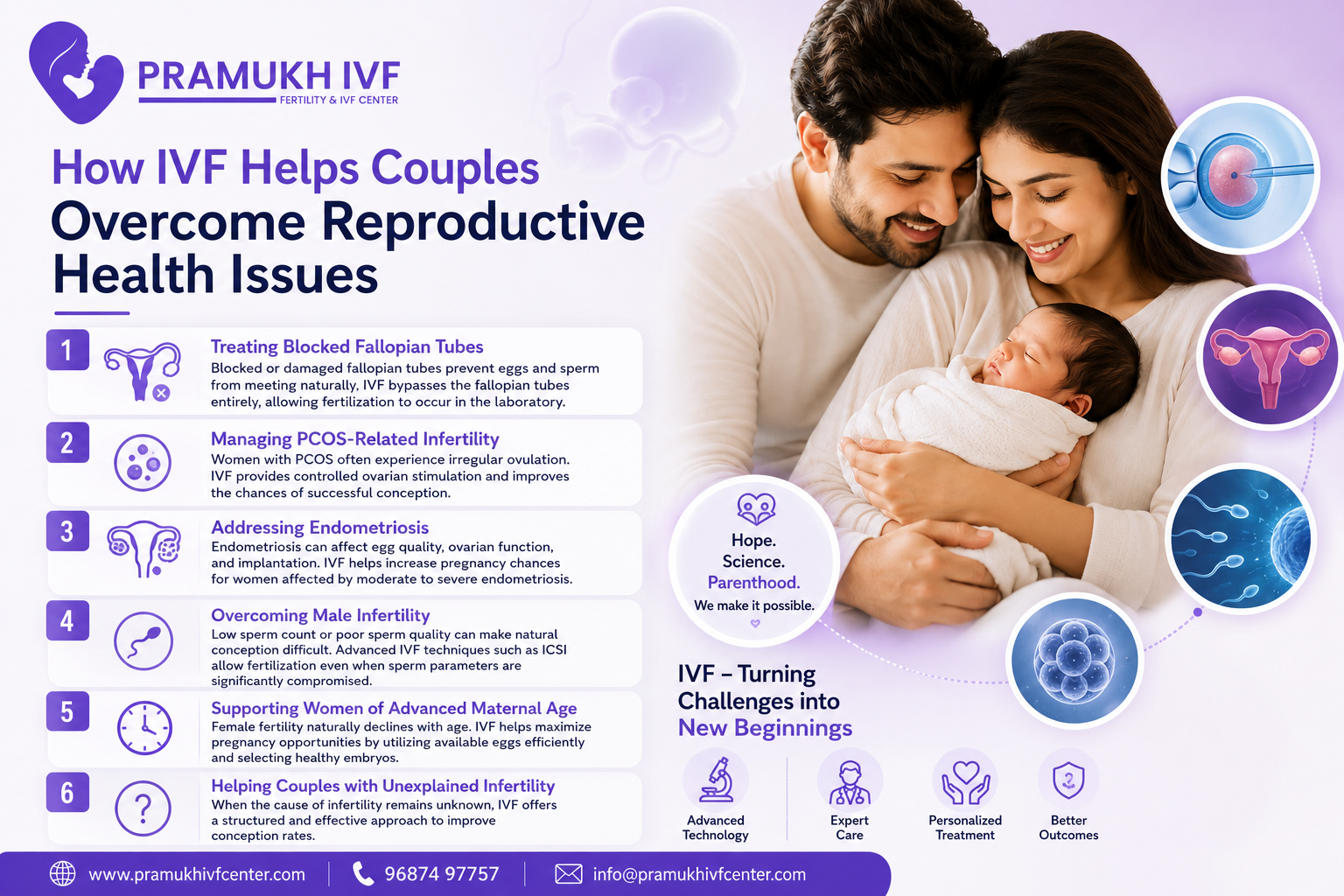
1. Treating Blocked Fallopian Tubes
Blocked or damaged fallopian tubes prevent eggs and sperm from meeting naturally. IVF bypasses the fallopian tubes entirely, allowing fertilization to occur in the laboratory.
2. Managing PCOS-Related Infertility
Women with PCOS often experience irregular ovulation. IVF provides controlled ovarian stimulation and improves the chances of successful conception.
3. Addressing Endometriosis
Endometriosis can affect egg quality, ovarian function, and implantation. IVF helps increase pregnancy chances for women affected by moderate to severe endometriosis.
4. Overcoming Male Infertility
Low sperm count or poor sperm quality can make natural conception difficult. Advanced IVF techniques such as ICSI allow fertilization even when sperm parameters are significantly compromised.
5. Supporting Women of Advanced Maternal Age
Female fertility naturally declines with age. IVF helps maximize pregnancy opportunities by utilizing available eggs efficiently and selecting healthy embryos.
6. Helping Couples with Unexplained Infertility
When the cause of infertility remains unknown, IVF offers a structured and effective approach to improve conception rates.
Benefits of IVF Treatment
High Success Rates
IVF has become increasingly successful due to advancements in reproductive technology, embryo culture systems, and genetic testing.
Personalized Treatment Plans
Every couple receives an individualized treatment plan tailored to their specific fertility challenges.
Advanced Laboratory Techniques
Modern fertility centers utilize sophisticated laboratory procedures that enhance fertilization and embryo development.
Genetic Screening Options
Preimplantation Genetic Testing (PGT) allows specialists to identify healthy embryos, potentially reducing the risk of genetic disorders.
Fertility Preservation
IVF enables egg freezing and embryo freezing, helping individuals preserve fertility for future family planning.
Who Should Consider IVF Treatment?
IVF may be recommended for couples experiencing:
- Infertility lasting more than one year
- Recurrent pregnancy loss
- Blocked fallopian tubes
- Severe male infertility
- Endometriosis
- PCOS with unsuccessful previous treatments
- Unexplained infertility
- Age-related fertility decline
A fertility specialist can evaluate your reproductive health and determine whether IVF is the most suitable treatment option.
Emotional Support During IVF
The IVF journey can be emotionally demanding. Couples may experience anxiety, uncertainty, and stress throughout treatment. Seeking support from fertility counselors, support groups, and loved ones can help maintain emotional well-being.
Open communication between partners and realistic expectations are important components of a successful fertility journey.
Tips to Improve IVF Success
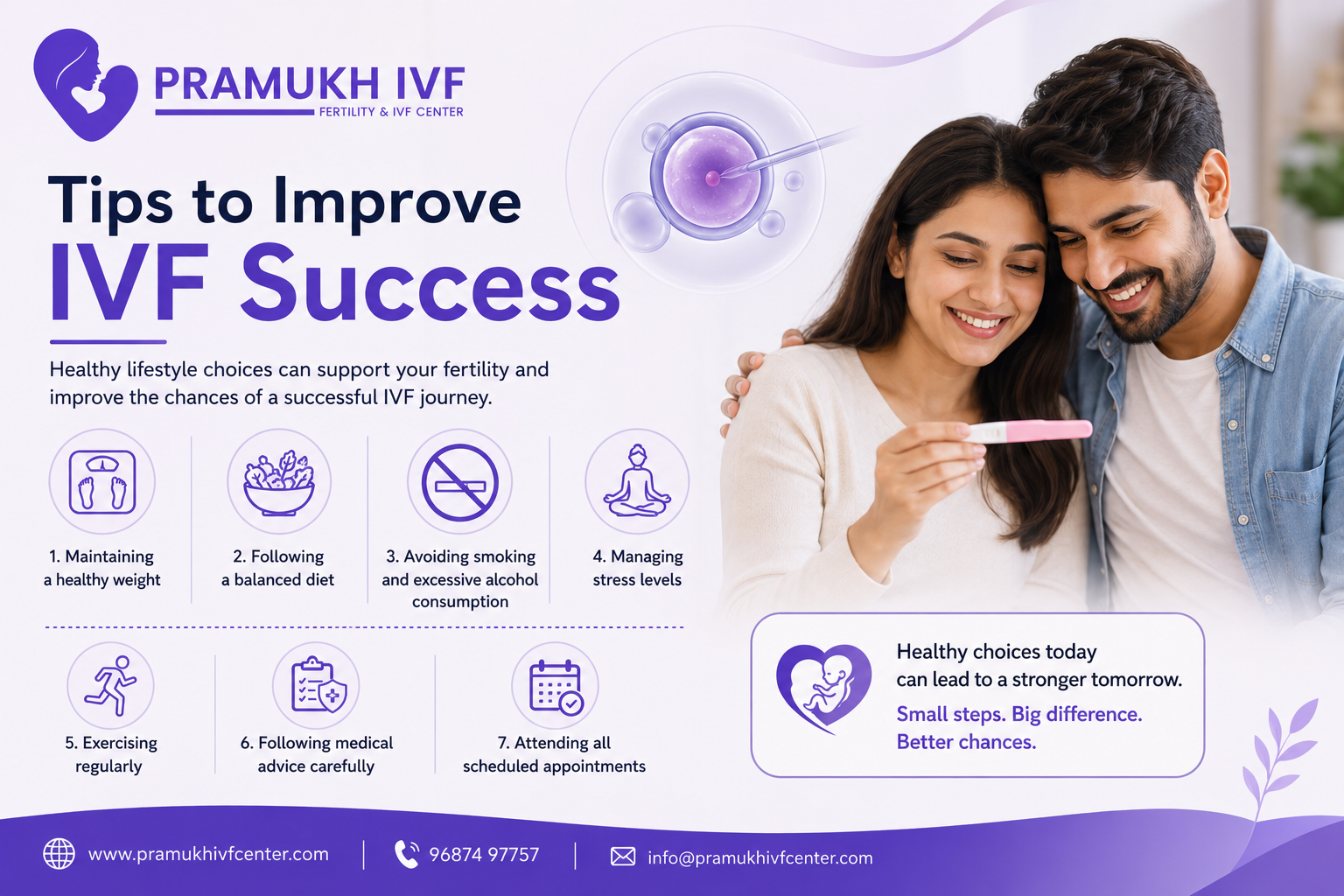
While success depends on various medical factors, couples can support their fertility by:
- Maintaining a healthy weight
- Following a balanced diet
- Avoiding smoking and excessive alcohol consumption
- Managing stress levels
- Exercising regularly
- Following medical advice carefully
- Attending all scheduled appointments
Healthy lifestyle choices contribute to overall reproductive health and may improve treatment outcomes.
Why Choose an Experienced IVF Center?
Selecting the right fertility center is a crucial step in the IVF journey. An experienced IVF clinic offers:
- Advanced fertility technology
- Experienced fertility specialists
- Personalized treatment plans
- Comprehensive fertility evaluations
- Compassionate patient care
- Transparent treatment guidance
The combination of expertise and modern reproductive medicine significantly improves the patient experience and treatment success.
Conclusion
IVF treatment has transformed the lives of countless couples facing reproductive health issues. From overcoming blocked fallopian tubes and PCOS to addressing male infertility and unexplained fertility challenges, IVF provides a scientifically proven pathway to parenthood.
While every fertility journey is unique, advances in IVF technology continue to improve success rates and offer renewed hope to couples dreaming of starting a family. If you are experiencing difficulty conceiving, consulting an experienced fertility specialist can help you understand your options and determine whether IVF is the right solution for your reproductive health needs.
With the right guidance, support, and medical expertise, parenthood may be closer than you think.