


How IVF Works: From Egg Retrieval to Pregnancy
- BLOG
- How IVF Works: From Egg Retrieval to Pregnancy
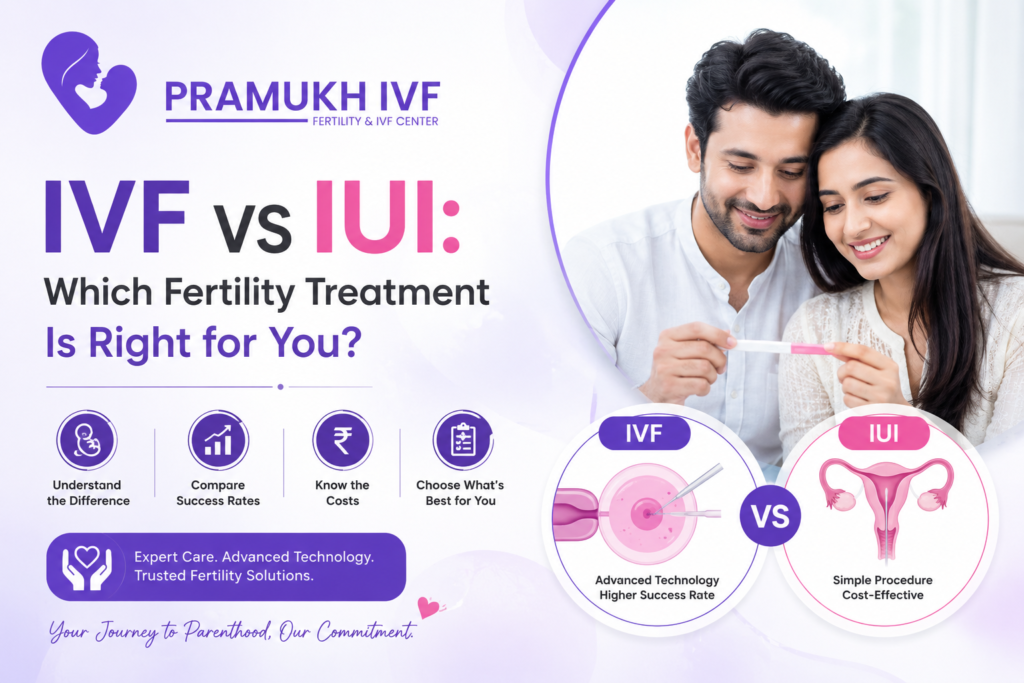
Infertility can be an emotional and challenging journey for couples who dream of starting a family. Fortunately, advancements in reproductive medicine have made parenthood possible for millions of people worldwide. Among the most commonly recommended fertility treatments are Intrauterine Insemination (IUI) and In Vitro Fertilization (IVF).
If you are struggling to conceive, you may wonder: Should I choose IVF or IUI? Which treatment is best for my situation?
The answer depends on several factors, including age, fertility diagnosis, medical history, and budget. In this comprehensive guide, we will explain the differences between IVF Treatment and IUI Treatment, their success rates, benefits, costs, and who can benefit most from each treatment.
Understanding Fertility Treatments
Before comparing IVF Treatment and IUI Treatment, it’s important to understand that both treatments are designed to help couples achieve pregnancy. However, they work in very different ways.
What Is IUI Treatment?
Intrauterine Insemination (IUI) is a fertility procedure in which specially prepared sperm is directly placed into the woman’s uterus during ovulation. This increases the chances of sperm reaching and fertilizing the egg.
IUI is often considered the first step in fertility treatment because it is less invasive, simpler, and more affordable than IVF Treatment.
How IVF (In Vitro Fertilization) Works in Ahmedabad ?
IVF is a medical process where eggs are collected from the woman and fertilized with sperm in a laboratory. The developed embryos are then transferred into the uterus to achieve pregnancy. The treatment involves steps like consultation, ovarian stimulation, egg retrieval, fertilization Process, and embryo transfer. With advanced technology and skilled specialists, IVF in Ahmedabad has become a safe and effective option for couples facing fertility challenges.
What Is IVF Treatment?
In Vitro Fertilization (IVF) is an advanced fertility treatment where eggs are retrieved from the ovaries and fertilized with sperm in a laboratory. The resulting embryo is then transferred into the uterus to achieve pregnancy.
IVF offers higher success rates and can overcome many fertility challenges that IUI cannot address.
IVF vs IUI: Key Differences
Factor | IUI | IVF |
Procedure | Sperm placed in uterus | Fertilization occurs in lab |
Complexity | Simple | Advanced |
Cost | Lower | Higher |
Success Rate | Moderate | Higher |
Time Required | Shorter | Longer |
Medication | Minimal | More intensive |
Suitable For | Mild infertility | Complex infertility cases |
Embryo Selection | Not possible | Possible |
How Does IUI Treatment Work?
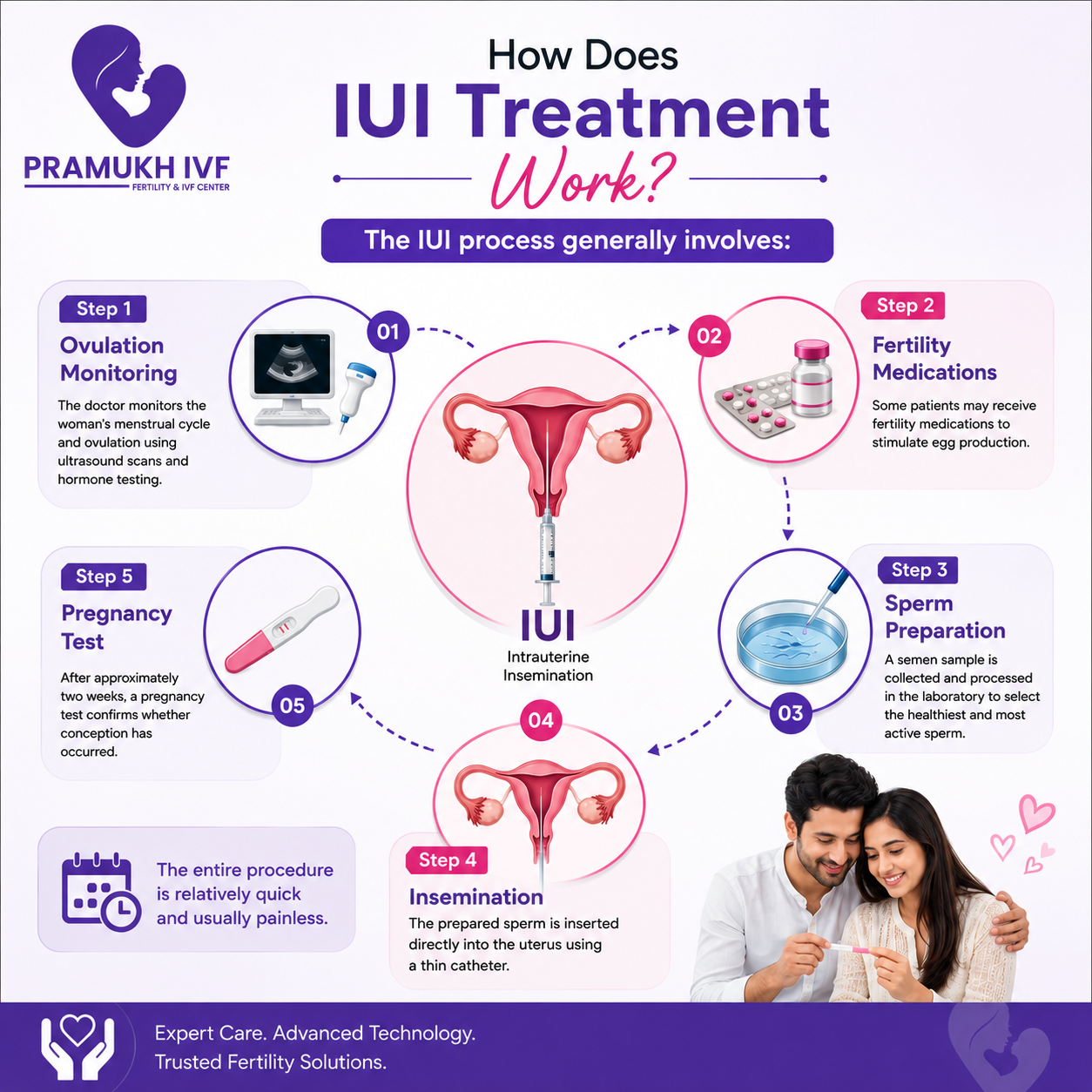
The IUI process generally involves:
Step 1: Ovulation Monitoring
The doctor monitors the woman’s menstrual cycle and ovulation using ultrasound scans and hormone testing.
Step 2: Fertility Medications
Some patients may receive fertility medications to stimulate egg production.
Step 3: Sperm Preparation
A semen sample is collected and processed in the laboratory to select the healthiest and most active sperm.
Step 4: Insemination
The prepared sperm is inserted directly into the uterus using a thin catheter.
Step 5: Pregnancy Test
After approximately two weeks, a pregnancy test confirms whether conception has occurred.
The entire procedure is relatively quick and usually painless.
How Does IVF Treatment Work?
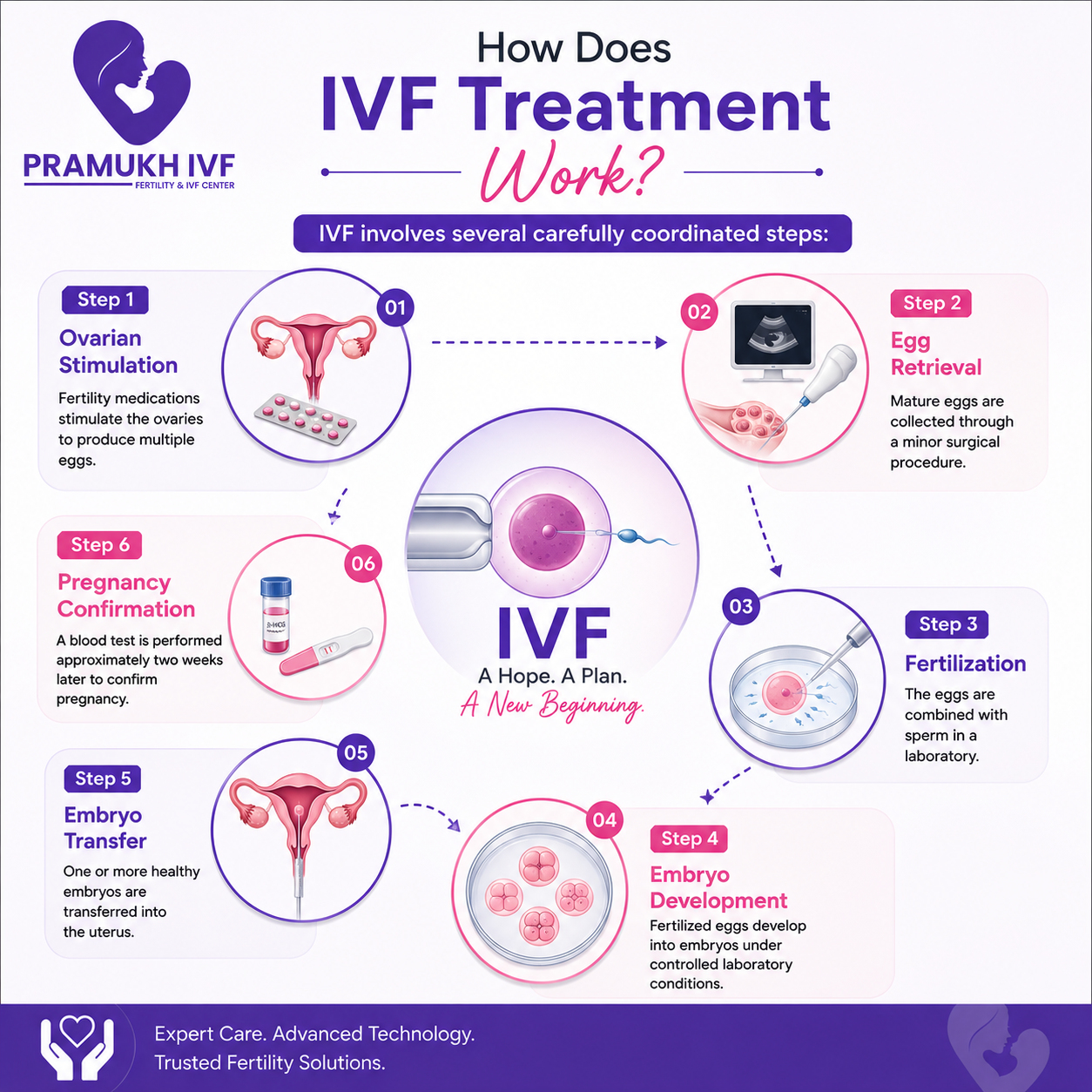
IVF involves several carefully coordinated steps:
Step 1: Ovarian Stimulation
Fertility medications stimulate the ovaries to produce multiple eggs.
Step 2: Egg Retrieval
Mature eggs are collected through a minor surgical procedure.
Step 3: Fertilization
The eggs are combined with sperm in a laboratory.
Step 4: Embryo Development
Fertilized eggs develop into embryos under controlled laboratory conditions.
Step 5: Embryo Transfer
One or more healthy embryos are transferred into the uterus.
Step 6: Pregnancy Confirmation
A blood test is performed approximately two weeks later to confirm pregnancy.
Who Is a Good Candidate for IUI Treatment?
IUI is often recommended for:
- Mild male infertility
- Unexplained infertility
- Ovulation disorders
- Cervical mucus problems
- Couples using donor sperm
- Early-stage fertility treatment
Women under 35 with healthy fallopian tubes often have better chances of success with IUI.
Who Is a Good Candidate for IVF Treatment ?
IVF may be recommended for:
- Blocked or damaged fallopian tubes
- Severe male infertility
- Endometriosis
- Low ovarian reserve
- Repeated IUI failures
- Advanced maternal age
- Genetic disorder screening
- Unexplained infertility lasting several years
For many couples, IVF provides the highest chance of achieving pregnancy.
IVF vs IUI Success Rates
One of the biggest factors couples consider is success rate.
Success depends on age, fertility diagnosis, embryo quality, sperm quality, and overall health.
Average IUI Success Rates
- Women under 35: 10%–20% per cycle
- Women 35–40: 10%–15% per cycle
- Women over 40: Less than 10% per cycle
Average IVF Success Rates
- Women under 35: 50%–60% per cycle
- Women 35–37: 40%–50% per cycle
- Women 38–40: 25%–40% per cycle
- Women over 40: Lower but still significantly higher than IUI
IVF generally provides a much higher success rate, particularly for couples facing significant fertility challenges.
Benefits of IUI Treatment
Less Invasive
The procedure is simple and does not require surgery.
Affordable
IUI is considerably less expensive than IVF.
Minimal Medication
Most patients require fewer fertility drugs.
Quick Procedure
Treatment cycles are shorter and easier to manage.
Natural Fertilization
Fertilization occurs naturally inside the body.
Benefits of IVF Treatment
Higher Pregnancy Success
IVF offers one of the highest success rates among fertility treatments.
Suitable for Complex Cases
It can overcome multiple fertility issues simultaneously.
Embryo Screening
Genetic testing can identify healthy embryos before transfer.
Better Control
Doctors can monitor fertilization and embryo development closely.
Fertility Preservation
Eggs and embryos can be frozen for future use.
IVF vs IUI Cost Comparison
Cost is an important factor when choosing fertility treatment.
IUI Cost
IUI is generally more affordable because it requires fewer medications and less laboratory involvement.
IVF Cost
IVF is more expensive because it involves:
- Advanced laboratory procedures
- Fertility medications
- Egg retrieval
- Embryo culture
- Embryo transfer
Although IVF has a higher upfront cost, its higher success rates may reduce the need for multiple treatment cycles.
Emotional Considerations
Fertility treatment affects more than just physical health.
Couples often experience:
- Anxiety
- Stress
- Uncertainty
- Emotional ups and downs
Choosing the right fertility clinic with experienced specialists and compassionate support can make a significant difference throughout the journey.
At Pramukh IVF Center, we understand that every fertility journey is unique. Our team provides personalized care, advanced reproductive technologies, and continuous support to help couples achieve their dream of parenthood.
How to Decide Between IVF and IUI Treatment
When deciding between IVF and IUI, consider the following:
Your Age
Female fertility declines with age, making IVF a better option for many women over 35.
Fertility Diagnosis
Certain conditions, such as blocked fallopian tubes or severe male infertility, often require IVF.
Budget
IUI is generally more affordable but may require multiple cycles.
Previous Treatments
If several IUI cycles have failed, IVF may offer a better chance of success.
Time Sensitivity
Couples wanting faster results may benefit from IVF’s higher success rates.
Consulting with a fertility specialist can help determine the most suitable treatment plan based on your individual circumstances.
Conclusion
Both IUI and IVF Treatment are effective fertility treatments, but the best choice depends on your specific fertility challenges, age, medical history, and goals.
IUI is often recommended as an initial treatment for mild infertility because it is less invasive and more affordable. IVF, on the other hand, offers higher success rates and can address more complex fertility issues.
If you are unsure which treatment is right for you, seeking expert guidance from fertility specialists can help you make an informed decision and take the next step toward parenthood with confidence.
At Pramukh IVF Center, we are committed to providing advanced fertility solutions tailored to every couple’s unique needs. Our experienced team is here to support you at every stage of your journey toward building the family you have always dreamed of.
Frequently Asked Questions
1. Which treatment is more successful, IVF or IUI?
IVF generally has higher success rates than IUI because fertilization occurs in a controlled laboratory environment before embryo transfer.
2. Is IUI Treatment Painful?
Most women experience little to no pain during IUI. Some may feel mild cramping similar to menstrual discomfort.
3. How many IUI cycles should I try before IVF Treatment?
Many fertility specialists recommend considering IVF Treatment after 3–6 unsuccessful IUI cycles, depending on age and fertility diagnosis.
4. Can IVF work after failed IUI treatments?
Yes. Many couples achieve successful pregnancies through IVF Treatment after unsuccessful IUI attempts.