


How IVF Works: From Egg Retrieval to Pregnancy
- BLOG
- How IVF Works: From Egg Retrieval to Pregnancy
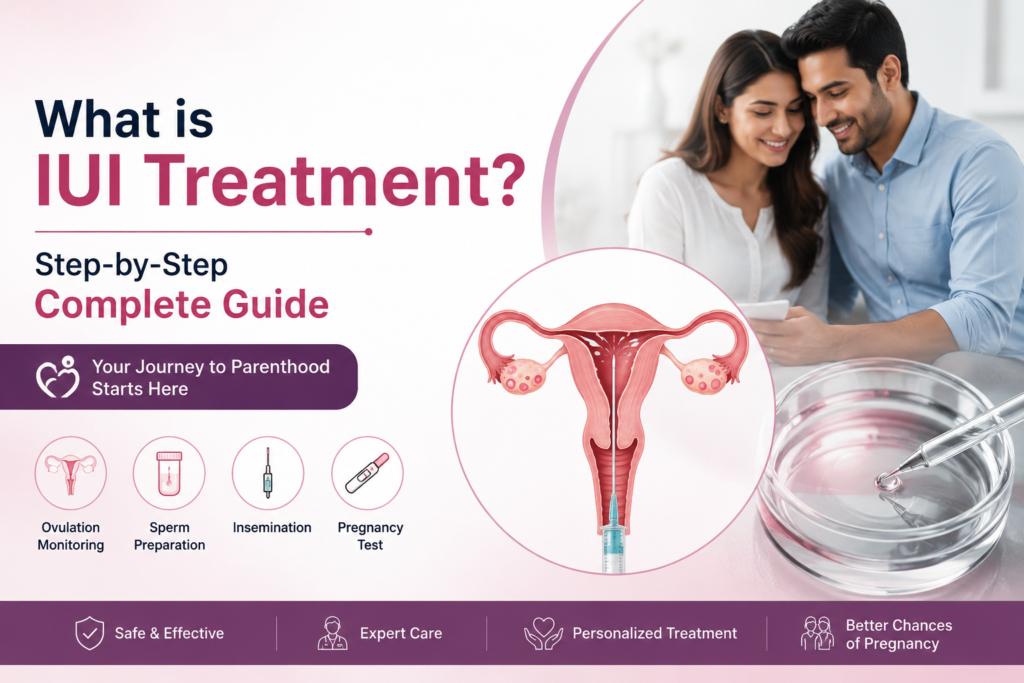
For many couples, starting a family comes naturally. However, some may face challenges in conceiving despite trying for several months or even years. Fortunately, advances in reproductive medicine have made parenthood possible for many couples struggling with infertility. One of the most common and effective fertility treatments is Intrauterine Insemination (IUI).
IUI is a simple, minimally invasive, and cost-effective fertility treatment that helps increase the chances of pregnancy by placing specially prepared sperm directly into the uterus during ovulation. This procedure shortens the distance sperm must travel to reach the egg, improving the likelihood of fertilization.
In this guide, we will explain everything you need to know about IUI treatment, including how it works, who can benefit from it, the step-by-step process, success rates, benefits, risks, and frequently asked questions.
What is IUI Treatment?
Intrauterine Insemination (IUI) is a fertility procedure in which healthy, concentrated sperm are placed directly into a woman’s uterus around the time of ovulation. By placing the sperm closer to the egg, IUI increases the chances of fertilization compared to natural conception.
The procedure is quick, relatively painless, and does not require surgery or anesthesia. It is often recommended as the first fertility treatment before considering more advanced options such as IVF (In Vitro Fertilization).
Benefit of IUI Treatment
IUI may be recommended for couples facing certain fertility challenges, including:
1. Unexplained Infertility
When no specific cause of infertility can be identified, IUI may help improve the chances of conception.
2. Mild Male Factor Infertility
Men with slightly low sperm count, reduced sperm motility, or mild sperm abnormalities may benefit from IUI.
3. Ovulation Disorders
Women who experience irregular ovulation or conditions like PCOS may undergo IUI along with fertility medications.
4. Cervical Issues
Problems with cervical mucus can prevent sperm from reaching the egg. IUI bypasses the cervix and places sperm directly into the uterus.
5. Endometriosis
Women with mild endometriosis may achieve pregnancy through IUI combined with ovulation induction medications.
6. Donor Sperm
Single women, same-sex couples, or couples with severe male infertility may use donor sperm during IUI treatment.
Step-by-Step IUI Treatment Process
Understanding the IUI procedure can help reduce anxiety and prepare couples for treatment.
Step 1: Initial Fertility Evaluation
Before beginning treatment, your fertility specialist will perform a comprehensive evaluation that may include:
- Medical history review
- Physical examination
- Hormone testing
- Ovulation assessment
- Ultrasound examination
- Semen analysis
These tests help determine whether IUI is the most suitable treatment option.
Step 2: Ovulation Monitoring
Successful IUI depends on precise timing. Your doctor will monitor your menstrual cycle to determine the optimal time for insemination.
Monitoring may involve:
- Blood tests
- Follicular ultrasound scans
- Ovulation predictor kits
The goal is to identify when the mature egg is ready for release.
Step 3: Fertility Medications (If Needed)
Some women may receive fertility medications to stimulate egg production and increase the chances of pregnancy.
Common medications include:
- Clomiphene Citrate (Clomid)
- Letrozole
- Gonadotropin injections
These medications encourage the development of one or more mature follicles.
Step 4: Trigger Injection
Once the follicles reach the appropriate size, a trigger injection containing hCG may be administered.
The trigger shot helps:
- Induce ovulation
- Ensure accurate timing of the IUI procedure
Ovulation typically occurs 24–36 hours after the injection.
Step 5: Sperm Collection and Preparation
On the day of the procedure, a semen sample is collected from the male partner or donor.
The sample undergoes a specialized laboratory process called sperm washing, which:
- Removes impurities
- Separates healthy sperm
- Concentrates highly motile sperm
This preparation improves the quality of sperm used during insemination.
Step 6: The IUI Procedure
The actual IUI procedure takes only a few minutes.
During the procedure:
- The woman lies comfortably on an examination table.
- A speculum is inserted into the vagina.
- A thin catheter is passed through the cervix.
- Prepared sperm are injected directly into the uterus.
Most women experience little to no discomfort. The procedure is generally painless and does not require anesthesia.
Step 7: Rest and Recovery
After the procedure, patients usually rest for 10–15 minutes before returning home.
Most women can:
- Resume normal activities
- Return to work the same day
- Continue regular daily routines
No hospitalization is required.
Step 8: Pregnancy Testing
Approximately two weeks after the procedure, a blood pregnancy test is performed to determine whether implantation has occurred.
This waiting period is often referred to as the “two-week wait.”
What is the Success Rate of IUI?
The success of IUI depends on several factors, including:
- Woman’s age
- Cause of infertility
- Egg quality
- Sperm quality
- Number of treatment cycles
Average success rates per cycle:
- Women under 35 years: 15–20%
- Women aged 35–40 years: 10–15%
- Women over 40 years: 5–10%
Many couples achieve pregnancy after multiple IUI cycles. Fertility specialists often recommend trying 3–6 cycles before considering IVF.
Benefits of IUI Treatment
IUI offers several advantages compared to more advanced fertility treatments.
Less Invasive
No surgery or egg retrieval is required.
Cost-Effective
IUI is significantly less expensive than IVF treatment.
Quick Procedure
The treatment takes only a few minutes.
Minimal Discomfort
Most women experience little or no pain.
Natural Fertilization
Fertilization occurs naturally inside the body.
Short Recovery Time
Patients can resume normal activities immediately.
Are There Any Risks Associated with IUI?
Although IUI is generally safe, there are some potential risks:
Multiple Pregnancy
Fertility medications may increase the chance of twins or triplets.
Mild Cramping
Some women experience temporary cramping after the procedure.
Infection
The risk is extremely low but possible.
Ovarian Hyperstimulation
Rarely, fertility medications may overstimulate the ovaries.
Regular monitoring helps minimize these risks.
When Should You Consider IVF Instead of IUI?
While IUI is effective for many couples, IVF may be recommended in situations such as:
- Blocked fallopian tubes
- Severe male infertility
- Advanced maternal age
- Multiple failed IUI cycles
- Severe endometriosis
- Very low ovarian reserve
Your fertility specialist will guide you toward the most appropriate treatment based on your individual circumstances.
Tips to Improve IUI Success
Couples can improve their chances of success by:
- Maintaining a healthy weight
- Following a balanced diet
- Avoiding smoking and alcohol
- Managing stress levels
- Taking prescribed supplements
- Following the doctor’s recommendations carefully
Healthy lifestyle choices can positively impact fertility outcomes.
Frequently Asked Questions
Is IUI painful?
No. Most women experience only mild discomfort similar to a routine gynecological examination.
How long does the IUI procedure take?
The actual procedure usually takes 5–10 minutes.
How many IUI cycles are recommended?
Many fertility specialists recommend 3–6 cycles before considering IVF.
Can I return to work after IUI?
Yes. Most women resume normal activities immediately after treatment.