


Infertility is not only a medical condition but also an emotional journey filled with hope, uncertainty, and social pressure. For many couples undergoing In Vitro Fertilization (IVF), the path toward parenthood can be emotionally overwhelming.
While IVF offers hope for starting a family, the process involves medical procedures, hormonal treatments, and waiting periods that can create emotional stress for both partners. This is why psychological support for IVF couples is an essential part of fertility care.
With proper emotional support, communication, and professional guidance, couples can face the challenges of IVF with resilience and confidence.
Understanding the Emotional Impact of IVF Treatment
The IVF journey is often filled with emotional ups and downs. Couples may feel hopeful at the beginning but experience anxiety, fear, or disappointment during the process.
Common emotional challenges during IVF include:
IVF treatment stress
Fear of treatment failure
Emotional exhaustion
Relationship tension
Family and societal pressure
In India, social expectations around parenthood can intensify these emotions. Many couples feel pressure from relatives or society, which can increase stress during fertility treatment.
Recognizing these emotional challenges is the first step toward maintaining mental well-being.
Why Communication Between Partners Is Crucial
One of the most important elements of a healthy relationship during fertility treatment is open communication between partners.
IVF affects both partners emotionally, but they may experience stress in different ways. One partner may feel hopeful while the other may feel anxious or discouraged.
Open conversations about:
- fears
- expectations
- treatment experiences
- emotional struggles
can help couples build stronger emotional understanding and avoid misunderstandings.
Healthy communication strengthens relationship resilience during IVF treatment.
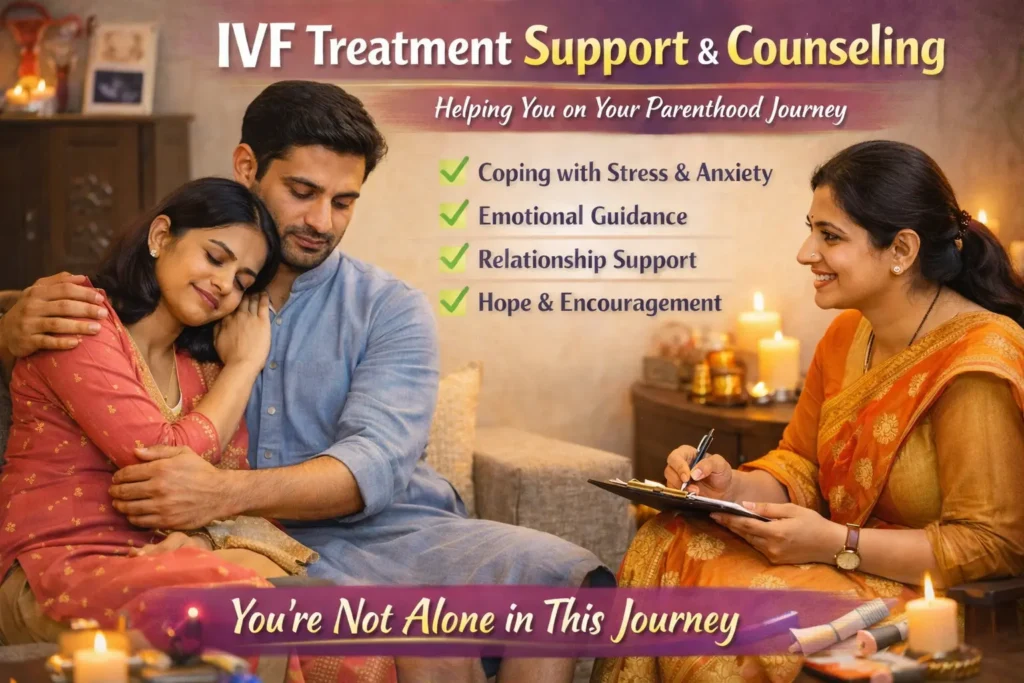
Emotional Support and Understanding in Relationships
Providing emotional support to your partner during fertility treatment is essential. Small acts of empathy and encouragement can make a significant difference.
Couples can support each other by:
- Listening without judgment
- Acknowledging each other’s feelings
- Offering reassurance and encouragement
- Avoiding blame or guilt
These actions help build emotional intimacy in relationships, allowing couples to navigate the IVF journey together rather than feeling alone.
Managing Stress and Mental Health During IVF
Fertility treatment can affect both mental health and emotional well-being. Couples may feel overwhelmed by medical appointments, financial concerns, and uncertainty about treatment outcomes.
Practicing stress management techniques can help couples remain emotionally balanced during the IVF process.
Helpful strategies include:
- Meditation and mindfulness
- Light exercise or yoga
- Talking to a counselor or therapist
- Taking breaks from fertility-related discussions
- Spending quality time together
Taking care of mental health improves the overall experience of fertility treatment.
The Role of Fertility Counseling for IVF Couples
Many fertility experts now recommend fertility counseling as part of comprehensive IVF care.
Professional counseling helps couples:
- Understand emotional reactions during fertility treatment
- Improve communication between partners
- Manage stress and anxiety
- Develop healthy coping strategies
For many couples, counseling becomes a valuable source of support during difficult stages of the IVF journey.
It also helps couples feel more prepared emotionally for different treatment outcomes.
Moving Forward With Hope and Emotional Strength
The IVF journey can be challenging, but couples who support each other emotionally often develop a deeper, stronger bond.
Focusing on psychological support, communication, and emotional understanding helps couples navigate fertility treatment with greater confidence.
While no fertility treatment can guarantee immediate success, emotional strength and mutual support can make the journey more manageable and meaningful.
Support for Couples on Their Fertility Journey
At experienced fertility centers across India, emotional care is increasingly recognized as an essential part of treatment.
Couples seeking guidance during fertility treatment may benefit from speaking with fertility specialists, counselors, and support groups that understand the emotional side of infertility.
With the right support system, couples can move forward with renewed hope and confidence toward their dream of parenthood.